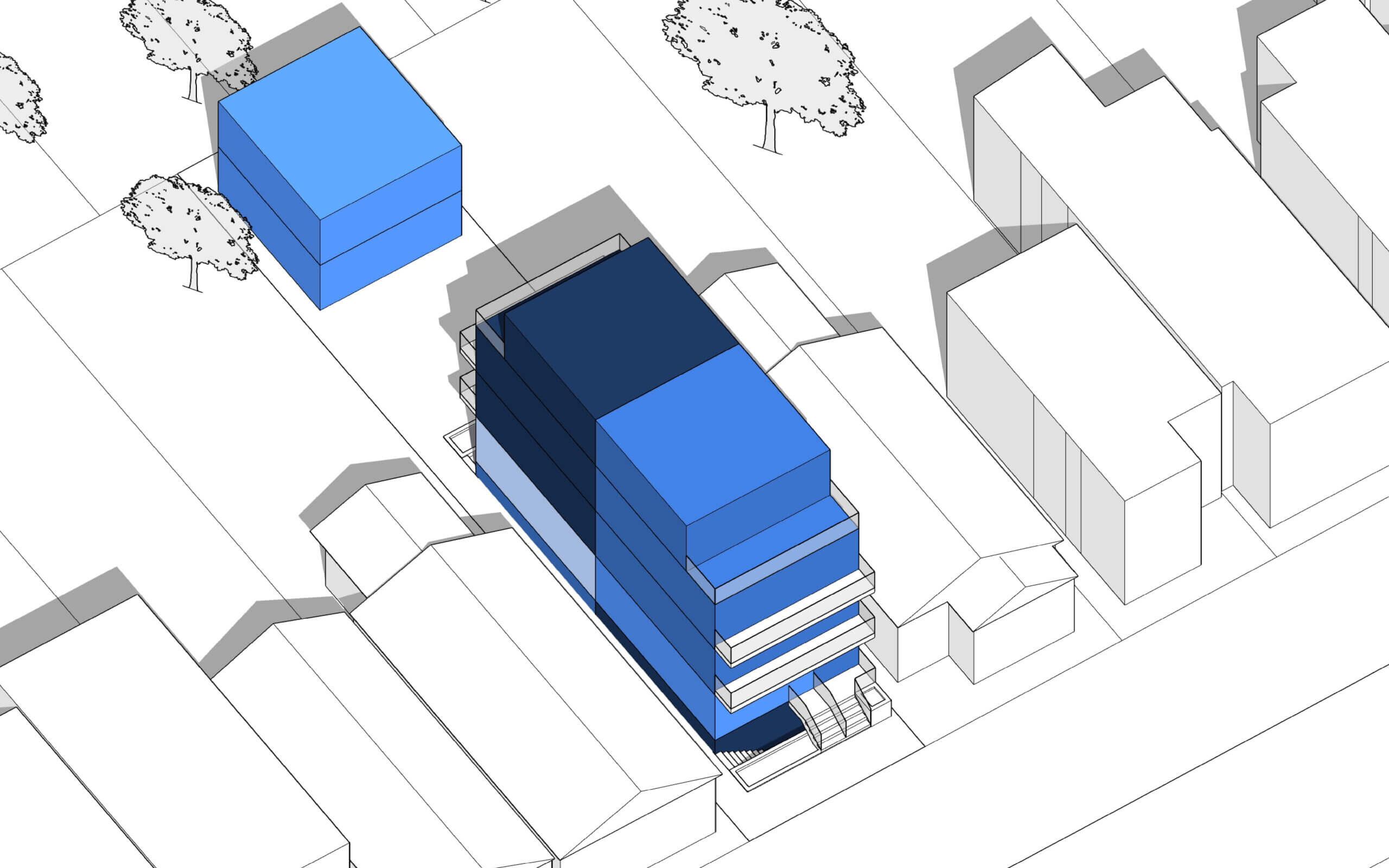
Many developers do not realize that upon completion of a rental redevelopment, an HST event is triggered. Upon completion, the owner must self-assess the increased value in the property, and that increase is subject to HST. For multiplex projects, the increased value is a seven-figure number, making the HST a liability and the new exemptions significant. Understanding this requirement, and the design provisions that allow you to qualify for the exemptions can make or break a development.
Please note, this blog is not tax advice. You should speak to a tax expert before starting a development. HST exemptions are new, rapidly changing, and likely to change again.The Canada Revenue Agency (CRA) has strict requirements that can disqualify a project built on a site with an existing structure. The core issue lies in the definition of a “new multiple unit residential complex.” For a project to qualify for the 100% Purpose Built Rental Housing (PBRH) rebate, it must be demonstrably new construction or a conversion of a non-residential property. This has created a critical pitfall: retaining any portion of an existing residential building’s structure can jeopardize the entire rebate claim.
Key Action Items for Developers
Your development strategy should prioritize establishing the project as unequivocally new to avoid reclassification as a non-qualifying substantial renovation.
- Plan for Full Demolition: Unless your project is a conversion of genuinely non-residential property (i.e. an old commercial office building), plan for a complete tear-down of any existing structure on the site. The retention of walls or foundation from a previous residential building is a primary risk factor.
- Prepare for Minor Variances: Recently approved multiplex zoning bylaws made it possible to construct fourplexes and sixplexes fully as-of-right, which made development predictable and fast. Those bylaws relied on using renovation provisions (saving 50% of existing walls) to maintain existing setbacks. These provisions do not apply to new-construction. In early 2025, the majority of our multiplex projects were as-of-right. By the end of 2025, none of them were.
- Confirm Unit Threshold: Ensure your project meets the minimum threshold for a “multiple unit residential complex,” which typically means four or more residential units. The PBRH rebate excludes single-unit complexes, duplexes, and triplexes.
- Document Start Date: Construction (defined as when excavation begins) must start after September 13, 2023, and before 2031, and be substantially completed before 2036.
- Seek Specialist Advice: The rules surrounding “new construction” versus “substantial renovation” for HST purposes are complex and highly fact-dependent. Consult a GST/HST real property tax specialist before starting a development to confirm the eligibility of your specific site and plans.
Key Action Items for Developers
Keep apprised of these requirements throughout your projects. The rules are new and changing rapidly. Maintain clear records, photos, and permits proving dates and scope of the development.
HST requirements contradict zoning requirements. Since a hearing at the Committee of Adjustment is inevitable, approach the situation as an opportunity to seek additional density. You may consider proposing additional variances to make the time and expense worth your while.
Our office would certainly prefer if the tax and zoning framework aligned to make development more predictable. Until that is the case, we are focused on being a multi-disciplinary firm who can oversee planning applications as well as building applications.
This blog is based on CRA GST/HST memorandum 19-3-9, published November 2025, with particular reference to Example 9, 10, and 11: Click here to view the full CRA GST/HST memorandum